Jester Skull Tattoo Stencil
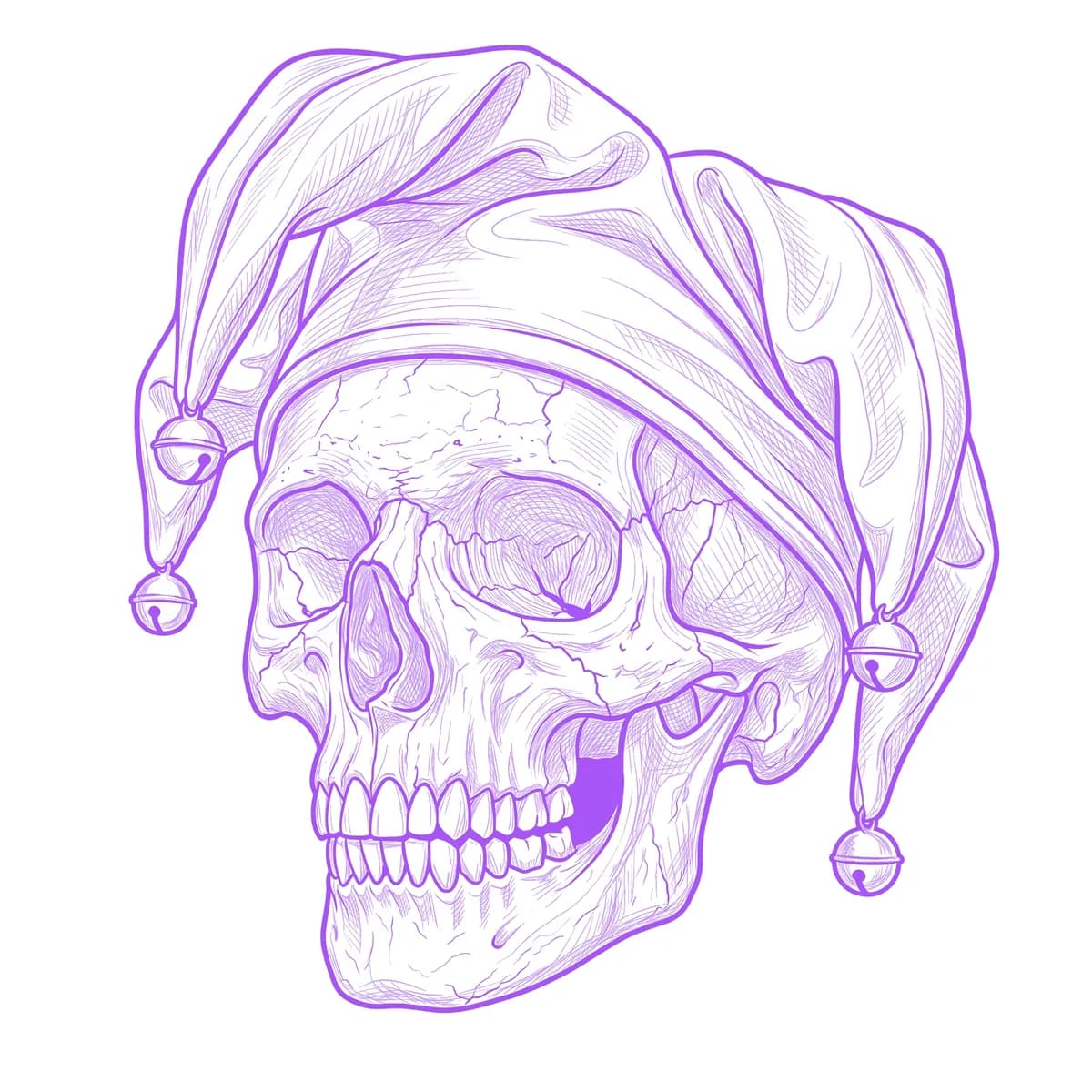
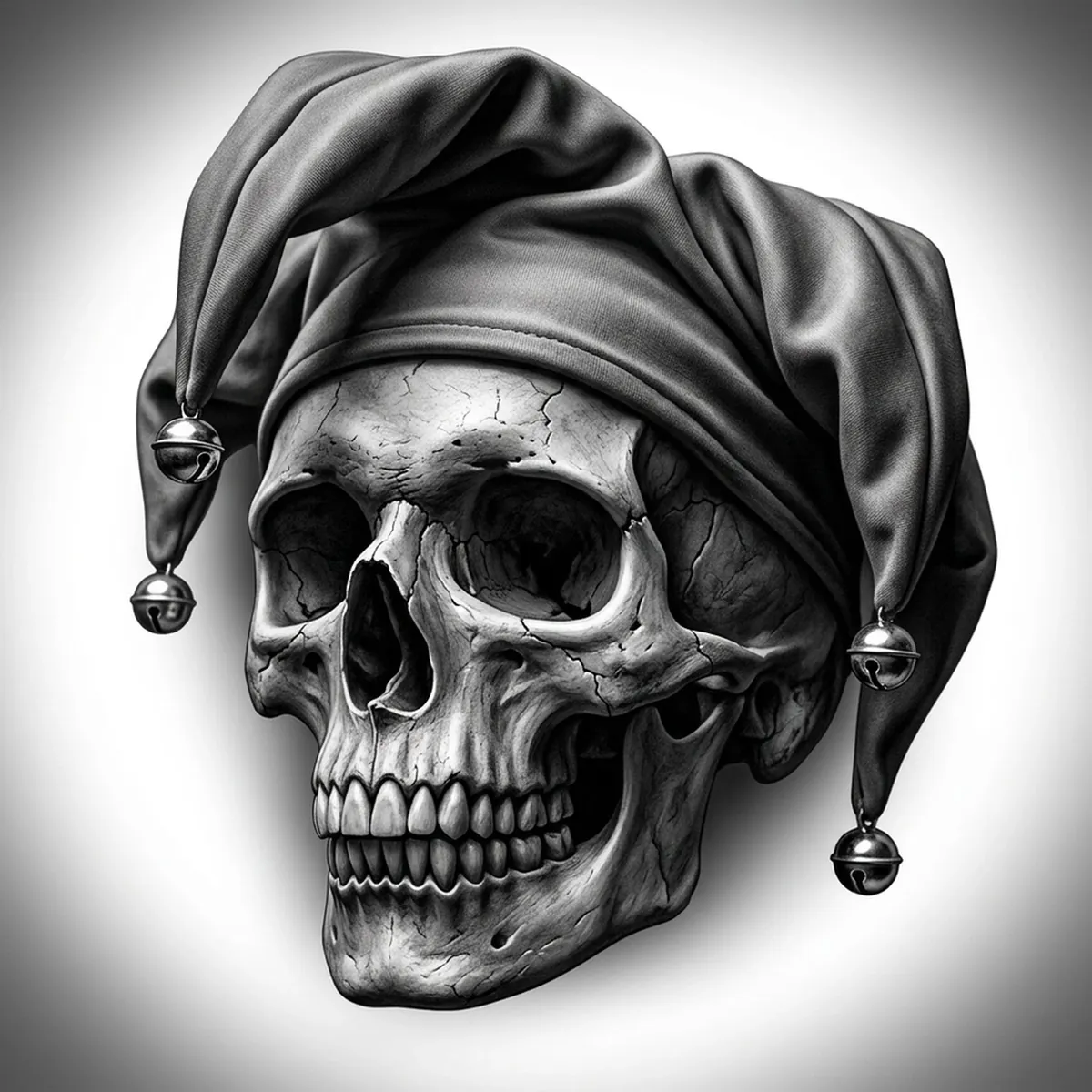
A jester skull pairs grim bone with the soft, drooping points of a cap-and-bells hat — and that contrast is the whole appeal. The challenge is the limp fabric of the cap: its folds and the rounded bells need their own shadow and highlight, while the cracked cranium keeps its porous texture and the sockets keep their depth. Stencil AI keeps tonal separation between the floppy cloth and the bone so both survive the move from reference to stencil.
Why Jester Skull works as a realism tattoo
- The drooping cap points and rounded bells give the realism styles (Standard and Hatching) soft folds and curved highlights that contrast against the hard skull.
- The mix of grin and motley creates a sinister-playful character that stands out from a plain skull at tattoo scale.
- Porous, mid-toned bone offers plenty of texture for the gradients, so the cranium stays detailed rather than flat.
- The hanging bells and cap tips frame the skull and create a natural focal balance for a larger piece.
How to make a jester skull tattoo stencil
Upload your reference
Choose a realism style
Export & transfer
Placement & sizing
A jester skull suits the forearm, the shoulder, or the chest where the floppy cap points and bells can drape around a clearly readable cranium.
Tips for the best result
- Choose a reference where light grazes the cap so the soft folds and the rounded bells catch highlights instead of flattening into a block.
- Use Hatching to keep both the bone texture and the limp-cloth folds distinct; Outline for a bolder, more graphic jester look.
- Check the eye sockets and the deepest cap folds — if they crush to pure black in the reference, the stencil loses depth, so favor faint internal tone there.
Frequently asked questions
What is the best style for a jester skull tattoo stencil?
Hatching or Standard keep both the bone texture and the floppy cap folds detailed. Outline gives a cleaner, bolder jester skull for a more graphic piece.
Will the soft cap and the hard skull read differently in the stencil?
Yes — as long as your reference shows fold shadows in the cap and porous texture in the bone, the stencil keeps them tonally separate instead of merging into one shape.
Made with the photo-to-stencil tool — turn any photo into a clean, tattoo-ready stencil in seconds.
Make your stencil now
Upload a reference and get a clean, tattoo-ready stencil in seconds.
Try Stencil AI